 Ano
AnoService
Hard Coat Anodizing, Type III, Sealed or Non-Sealed
Hard anodic coating in clear, black, and dyed colors to MIL-A-8625 Type III, run sealed or non-sealed depending on whether wear or corrosion leads the print.
Start here
What Is Hard Coat Anodizing?
Hard Coat Anodizing, called out on drawings as MIL-A-8625 Type III, is a thicker and denser version of the same oxide layer Type II produces.
It is grown at a lower bath temperature and a higher current density, and that combination packs the oxide structure much tighter. The result is a surface hard enough to run against other metal, which is why Hard Coat is the finish for parts that live hard lives: sliding surfaces, tooling, fixtures, actuators, pistons, guides, and anything a drawing marks for wear.
Because the coating is thicker, it also builds more dimension than Type II does, roughly half of it growing outward from the original surface. On a dimension-critical part that is not a problem as long as the drawing accounts for it, which is the single most common thing we flag before running a first article.
The seal decision
Sealed or Non-Sealed Hard Coat: The One Decision That Matters
The oxide layer comes out of the tank porous. Sealing closes those pores, and what you gain and lose is a straight trade. A non-sealed Hard Coat keeps the hardest, most abrasion-resistant surface the process can produce. A sealed Hard Coat gives up a little of that hardness and gets meaningfully better corrosion resistance in return.
Your print usually decides this, and when it does, we run what it says. When it does not, tell us what the part actually does and where it lives, and we will recommend one on the quote. A guide rail inside a dry machine and a bracket that sees weather want opposite answers, and there is no version of this we can guess correctly from a part number.
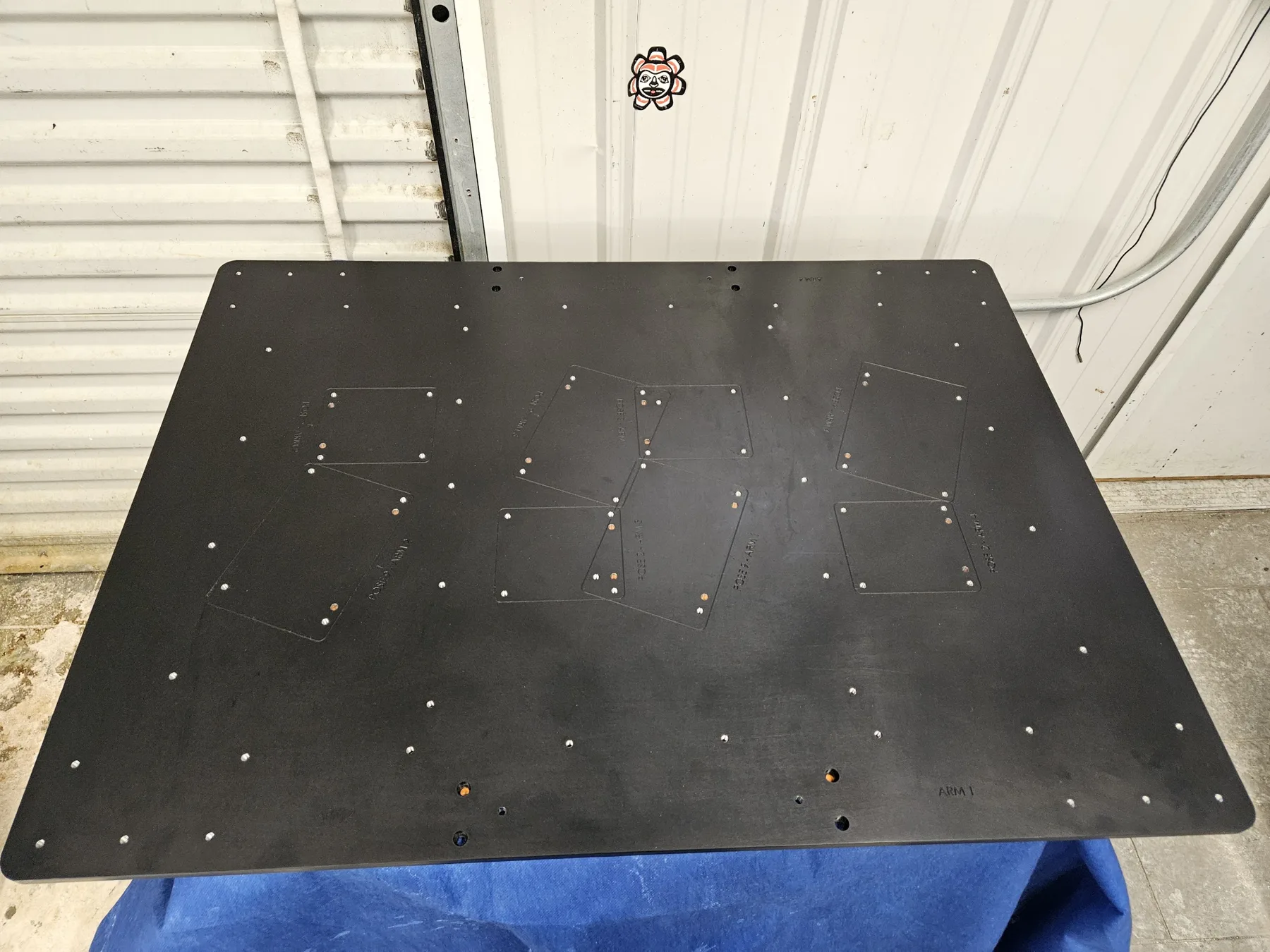 TYPE III BLACK · CUSTOMER PART
Hard Coat with PTFE
When a Hard Surface Also Has to Be a Slippery One
Hard Coat solves wear. It does not solve friction, and plenty of parts need both. When a drawing wants a hard anodic coating and a low-friction surface at the same time, we impregnate the coating with PTFE so the wear surface carries its own dry lubricant. That is its own service line here: PTFE Impregnated Anodizing, commonly specified under AMS 2482.
Going the other direction, if the part is decorative or general purpose and nothing is rubbing on it, Type II is the better value and opens up the full color range. MIL-A-8625 governs both types; the specification text is free on the government library at quicksearch.dla.mil, and our MIL-A-8625 page walks through reading the callout.
How it runs in Paoli
A Hard Coat Job, Start to Finish
Quote With the Wear Story
The print callout, plus one sentence on what the part actually does. Sealed or non-sealed follows from that, and so does whether we flag the dimension.
Rack for High Current
Hard Coat runs at higher current and lower temperature than Type II, so racking and contact points get extra attention. A weak contact shows up as a soft spot in the coating.
Grow the Coating
The dense oxide builds to the thickness on the callout, penetrating into the surface and building outward from it in roughly equal measure.
Verify and Return
Thickness and appearance are checked against the print, then parts are packed and returned on the 3 to 5 day clock.
Questions
Hard Coat Anodizing Questions
How Thick Is Hard Coat Anodizing?
Thickness is built to whatever the print calls out. Hard Coat penetrates and builds considerably more than Type II does, with roughly half the coating growing outward from the original surface, so dimension-critical features should carry the coating allowance on the drawing.
Can Hard Coat Anodizing Be Dyed?
Yes. Clear and black are the usual callouts, and buyers often assume those are the only options, but Hard Coat takes dye and we run it in other colors on request. The coating is dense and naturally darker than Type II, so a given dye reads deeper on it. Send a color target with the print and we will confirm what is achievable on your alloy, and see Color Anodizing for the full palette.
Do You Expedite Hard Coat Work?
Yes. Standard is 3 to 5 days and expedites run as fast as same day. Expedite requests get answered by text so you are not waiting on an email to find out whether the date is possible.
Does Hard Coat Work on Tight-Tolerance Parts?
Yes, when the drawing accounts for the build. This is the most common thing we flag before a first article: Hard Coat adds real dimension, so put the allowance on the callout and we will finish to it.
Can You Strip and Re-Run a Hard Coated Part?
Talk to us before you assume it. Stripping an anodic coating takes base metal along with it, so a dimension-critical part may not survive the round trip. On a non-critical part it is usually straightforward.
Is Hard Coat Anodizing the Same as Hard Anodizing?
Yes. Hard Coat, Hardcoat, Hard Anodizing, and Type III all describe the same process, and a drawing may use any of them. If yours says something else entirely, send it and we will tell you what it is asking for.
Where to go next
Pages That Answer the Next Question About Hard Coat
Wear is rarely the only requirement on a part. Friction, color, and conductivity each send the drawing somewhere different, and these pages cover where.

Ready when you are
Wear Parts Finished Like They Matter.
Hard Coat Anodizing to MIL-A-8625, sealed or non-sealed, quoted from your print.