 Ano
AnoGuide · Materials
How Different Aluminum Alloys Take Anodizing
The coating is transparent and grown out of the metal, so it inherits whatever the metal brings with it. Two parts run identically through the same tank can come out visibly different because they were cut from different alloys. Here is what to expect from the ones we see most.
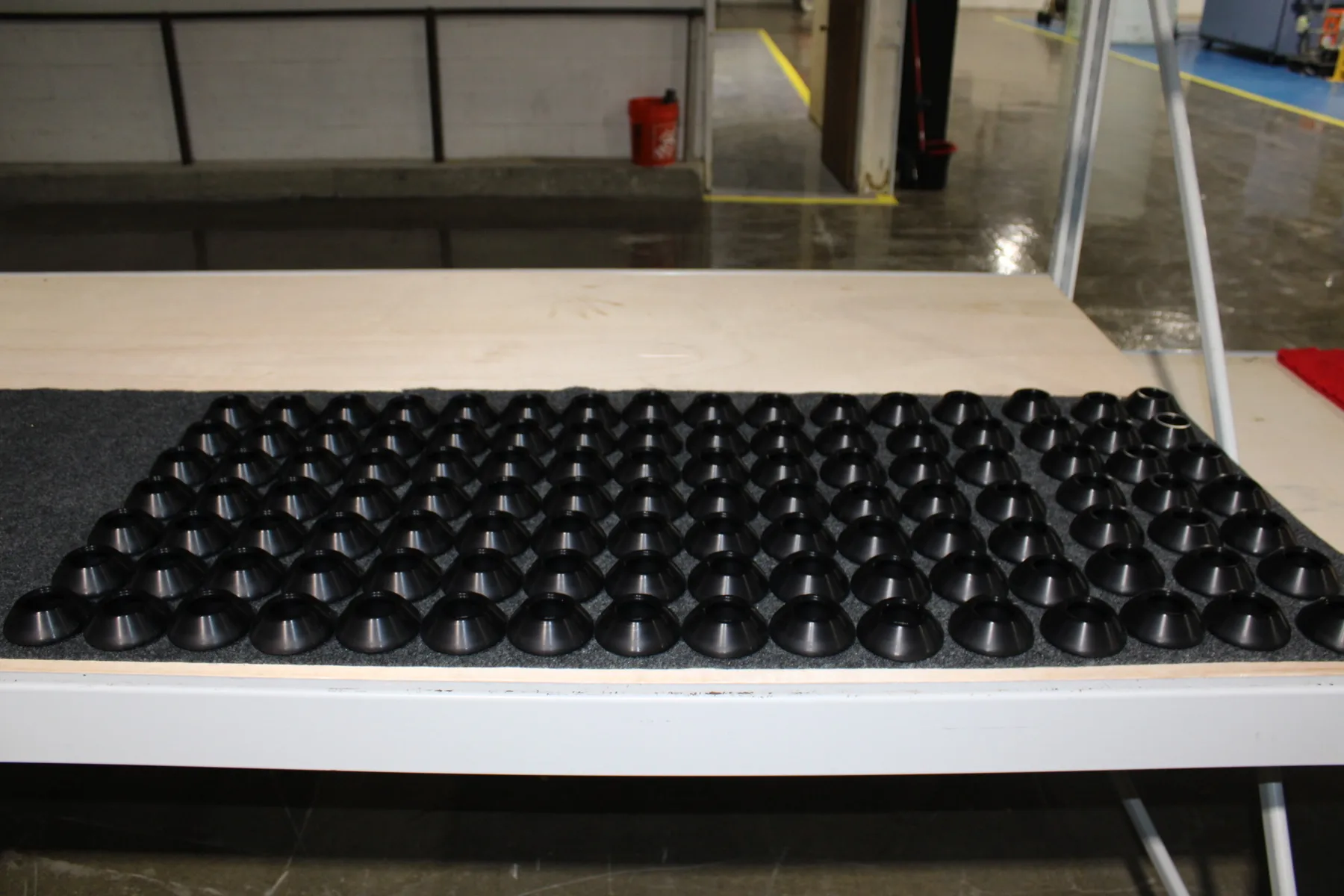 DARK FINISH WORK · THE BENCH
Why the Alloy Matters at All
Anodizing converts the aluminum surface into aluminum oxide. Aluminum alloys are not pure aluminum; they contain copper, silicon, magnesium, zinc, manganese and iron in varying amounts, and those elements do not convert the same way the aluminum does. Some dissolve out during etching and leave voids. Some stay behind as particles inside the coating. Either way they interrupt the clean oxide structure.
The result is that alloy content drives three things a buyer cares about: how uniform the finish looks, how consistently it takes dye, and in the case of Hard Coat, how thick and hard a coating you can realistically grow.
| ALLOY | MAIN ALLOYING ELEMENT | HOW IT ANODIZES | NOTES |
|---|---|---|---|
| 6061, 6063 and the 6000 series | Magnesium and silicon | Excellent, clear and consistent | The reference standard for machined work |
| 5052 and the 5000 series | Magnesium | Very good, bright clear finish | Common on sheet and formed parts |
| 1100, 3003 | Nearly pure, manganese | Excellent clarity | Soft; handling marks show |
| 2024 and the 2000 series | Copper | Harder, often darker and less uniform | Copper interferes; set expectations |
| 7075 and the 7000 series | Zinc, with copper | Good, Hard Coat runs well | Can read slightly different in color |
| Castings (A356, 380 and similar) | High silicon | Variable, often gray and mottled | Silicon does not convert; expect character |
| Extrusions | Usually 6000 series | Very good | Watch for die lines from the extruder |
6061, and Why It Is the Benchmark
If a machine shop sends us a part with no alloy stated, the odds are it is 6061, usually in T6 temper. There is a reason it dominates: it machines predictably, it is available everywhere, and it anodizes beautifully. The magnesium and silicon content is low enough not to disrupt the oxide structure, so clear comes out clean, black comes out genuinely black, and colors come out where you expect them.
It also takes Hard Coat well, which matters because plenty of parts are specified in 6061 precisely so they can be hard coated. When somebody asks us what alloy to design in for a finished appearance, and the mechanical requirements allow a choice, this is the answer.
The Alloys That Need a Conversation First
High-copper alloys, principally 2024. Copper is the single most disruptive element for Anodizing. It does not convert to oxide, it tends to dissolve preferentially during processing, and the resulting coating is less uniform and often noticeably darker. 2024 can absolutely be anodized, and it is anodized every day across the industry, but a customer expecting the appearance of a 6061 part will be disappointed. Tell us the alloy and we will set expectations on the quote instead of at delivery.
Castings, particularly high-silicon casting alloys. Silicon behaves similarly: it stays put as particles rather than converting, so the finish takes on a gray, sometimes mottled character. On a functional part that is completely acceptable and often invisible in service. On a cosmetic part it is a real limitation, and no amount of process control removes it because it is metallurgy rather than technique.
Mixed assemblies. The most common disappointment we see has nothing to do with any single alloy. It is two parts of one product, cut from different alloys or bought from different suppliers, anodized correctly and arriving visibly different. If parts have to match each other, say so with the request for quote and we will run them together.
What We Do Not Anodize
Machined aluminum parts, and only machined aluminum parts. We do not anodize steel and we do not anodize titanium; both need entirely different chemistry. Keeping the shop to one metal is a large part of why the finish quality and the turnaround both hold, and it is worth saying plainly so nobody ships us parts we cannot run.
Extrusions, Sheet and Plate
Most extruded aluminum is 6000 series, so it anodizes very well and architectural extrusion finishing is an entire industry built on that fact. The thing to watch is die lines: the fine longitudinal marks left by the extrusion die. Anodizing will not hide them and the etch step tends to make them slightly more apparent, so on a cosmetic extruded part the extruder's die condition matters as much as the finisher does.
Sheet and plate bring their own consideration, which is directionality. Rolled material has a grain, and a finished surface can read differently depending on which way the light runs across it. On an assembly cut from one sheet this is invisible; on parts cut from different sheets or oriented differently, it can be obvious. If parts have to match, orientation is worth controlling at the machining stage.
Plate also carries the possibility of property variation through its thickness on heavier sections, which can show as a subtle difference between a surface machined from near the plate face and one machined from the middle.
Temper, and the Thing Nobody Mentions
Temper affects appearance less than alloy does, but it is not nothing, and 6061-T6 against 6061-T651 can read slightly differently in a demanding cosmetic application. Far more important in practice is the surface condition the part arrives in.
Anodizing is faithful to what is underneath it. Machining marks, tool chatter, scratches from handling, inconsistent bead blasting and fingerprints in the wrong place all survive the process, and the etch step tends to reveal them slightly more than hide them. If appearance matters on your part, the surface preparation before it reaches us matters at least as much as anything that happens in our tanks.
Common Questions
Which Aluminum Alloy Anodizes Best?
The 6000 series, and 6061 in particular, is the benchmark for machined work. Its magnesium and silicon content is low enough not to disrupt the oxide structure, so clear finishes come out clean, black comes out genuinely black, and colors land where you expect. The 5000 series and near-pure alloys also finish very well.
Can You Anodize 7075?
Yes, and it takes Hard Coat well, which is often why the part is in 7075 to begin with. The zinc and copper content can make the finished color read slightly differently from a 6061 part, so if the two have to match visually, tell us before the job runs.
Why Did My 2024 Parts Come Out Darker Than Expected?
Copper. It is the most disruptive element for Anodizing: it does not convert to oxide and tends to dissolve preferentially during processing, giving a less uniform and often darker coating. This is a property of the alloy rather than a process fault, and a shop that promises a 6061 appearance on 2024 is overselling.
Can Cast Aluminum Be Anodized?
Yes, with realistic expectations. Casting alloys are usually high in silicon, which stays as particles rather than converting, so the finish takes on a gray and sometimes mottled character. Perfectly acceptable on a functional part; a genuine limitation on a cosmetic one.
Do You Anodize Steel or Titanium?
No. We anodize machined aluminum parts only. Both of those metals need entirely different chemistry, and keeping the shop to one metal is a large part of why our finish quality and turnaround hold.
Why Do Two Parts From the Same Order Look Different?
Almost always alloy, heat lot, temper or surface preparation rather than the Anodizing. The coating is transparent and takes on the character of the metal beneath it. If parts must match each other, tell us with the request and we will run them in the same batch.
Should I Specify the Alloy on the Drawing or Just in the Request?
Both, ideally. The drawing is the durable record and the request is what we quote from. Where the two disagree we will ask, because an alloy substitution made at the machining stage is a common and completely invisible cause of a finish that does not match the last order.
Does the Machining Finish Affect How the Part Looks After Anodizing?
Substantially. Anodizing is faithful to the surface underneath, and the etch step tends to make marks slightly more visible rather than less. Tool marks, scratches and uneven bead blasting all carry through. On cosmetic parts, surface preparation before finishing matters as much as the finishing does.
Keep Reading

Ready when you are
Tell Us the Alloy on the Request.
It costs you one line and it means expectations get set on the quote instead of at delivery.