 Ano
Ano
Service
Color Anodizing, Matched to the Shade You Specify
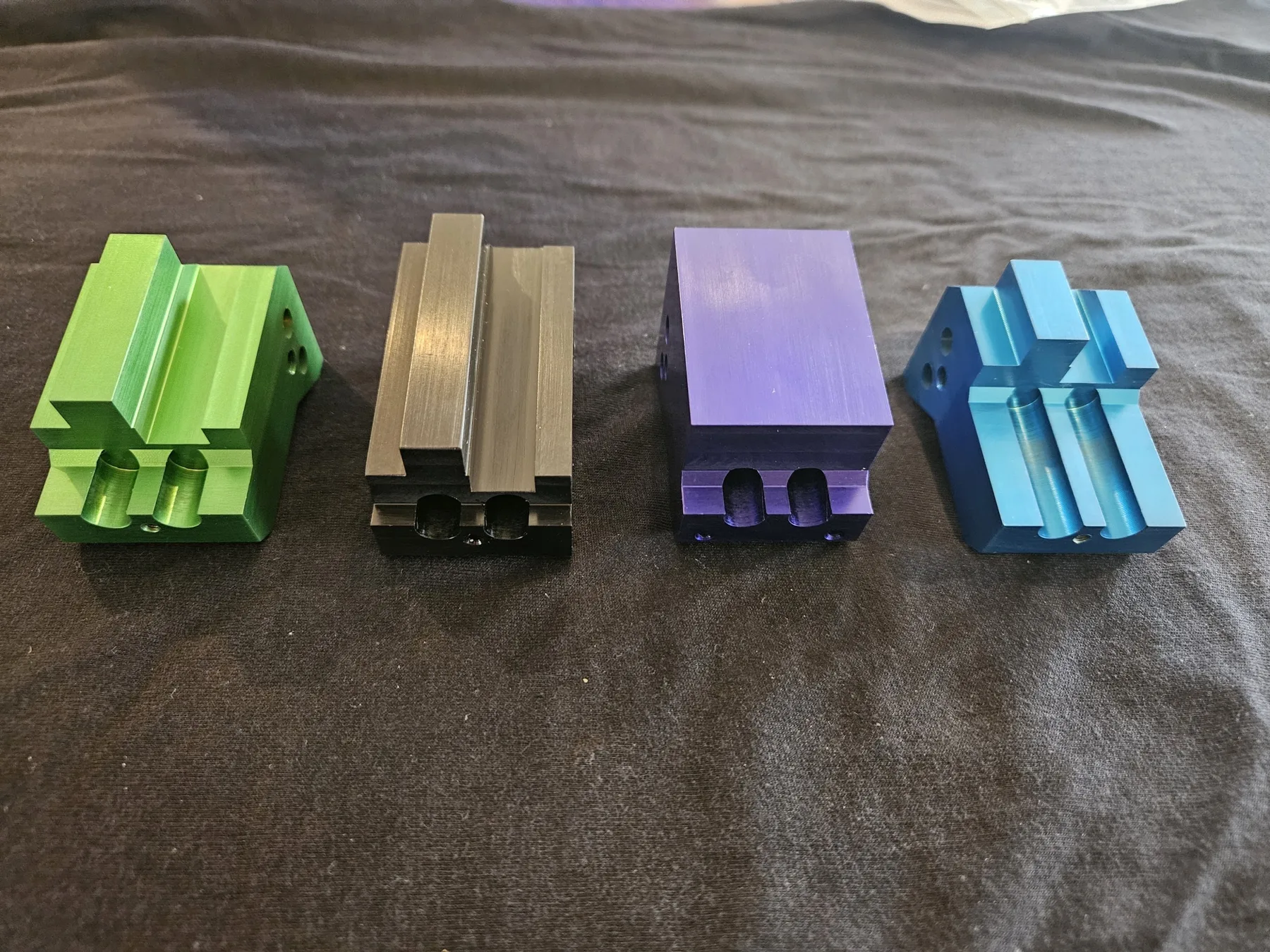
Dyed Type II Anodizing in red, blue, gold, green, orange, and brown, with custom color matching on request. Dyed to your spec, not to close enough.
Start here
How Does Color Anodizing Work?
The anodic layer is porous before it is sealed, and that is what makes the color permanent.
Type II Anodizing grows a coating full of microscopic pores. Dye is drawn down into those pores, and then a sealing step closes the surface over the top of it. The color ends up inside the coating rather than sitting on it, which is why an anodized color will not chip or peel the way paint can. There is no film to lift, because the color is part of the metal's own oxide.
What that means practically is that anodized aluminum colors keep the machined feel of the part, add very little thickness on a standard decorative coat (plan a coating allowance on tight tolerance work, as the thickness guide explains), and wear at the same rate as the surface itself. It also means the shade depends on how the base coating came out, which is why holding a color consistently across a batch and across reorders comes down to process discipline more than to the dye itself.
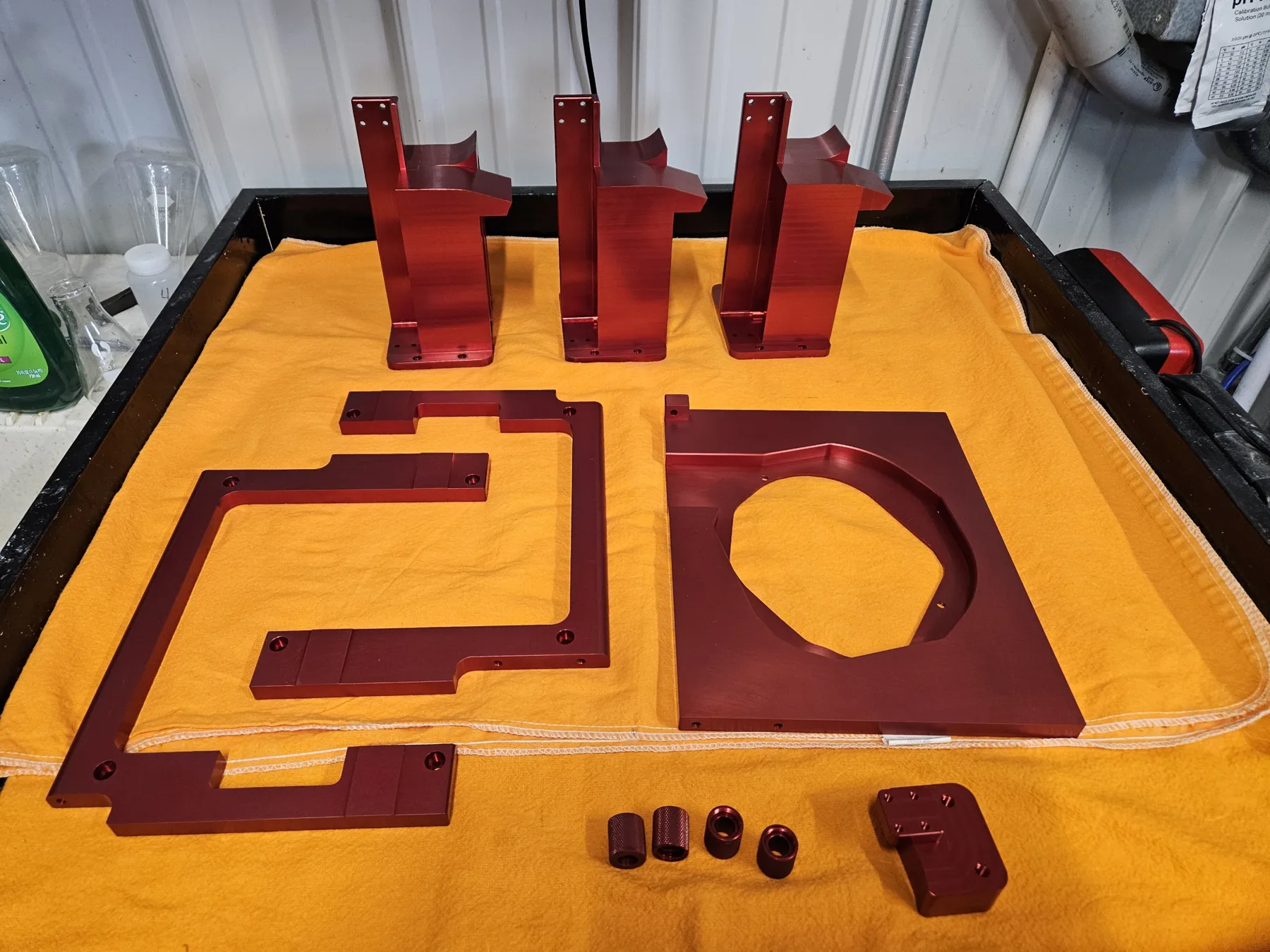 TYPE II DYED RED · CUSTOMER PARTS
The palette
The Anodized Aluminum Colors We Run
Red, blue, gold, green, orange, and brown run as standard work here. Gold anodized parts are a regular request, and the shade you get depends as much on the alloy and the coating thickness as on the dye, which is worth knowing before you compare two vendors' samples side by side.
If your brand, your assembly, or a customer's existing part needs a specific shade, send us a sample part or a color target with the request and we will match it. Matching is quoted with the job. We would rather tell you up front that a target is not achievable on your alloy than deliver something close and let you find out.
Color Anodizing or paint
Why Engineers Specify Dye Instead of a Coating
This comparison comes up on almost every first quote, so it is worth setting out plainly instead of leaving it to a sales line. The difference is not about quality. It is about where the color physically sits.
| PROPERTY | ANODIZED COLOR | PAINT OR POWDER |
|---|---|---|
| Where the color lives | Inside the oxide layer | On top of the surface |
| Chipping and peeling | Will not chip or peel; it is the surface | Possible at edges and wear points |
| Dimension change | Negligible, held to print | Adds measurable thickness |
| Surface hardness | Stays hard | Depends on the coating |
When a part genuinely needs paint or powder coating, we will say so plainly, because those are processes we do not run and pretending otherwise would cost you a week. The base process under every color is standard Type II Anodizing, and if you want black specifically, that has its own page: Black Anodizing. ASM International covers the metallurgy in depth at asminternational.org.
How it runs in Paoli
A Color Job, From Target to Match
Name the Target
A sample part, a color chip, or a specification number. We confirm what is achievable on your alloy before quoting, so nobody is surprised at delivery.
Run the Base Coating
Color rides on Type II Class 2, and the quality of that base coating decides how evenly the dye takes. Get this wrong and no amount of dye time saves the shade.
Dye and Seal
The batch dyes together so the shade holds part to part, then the seal closes the coating over the color and locks it in.
Check the Match and Return
Finished parts are checked against the target before they pack, and the recipe is kept on file so your reorder references the same run.
Questions
Color Anodizing Questions
Can You Match the Color on Our Existing Parts?
Yes. Send a sample part or a color target with the request for quote and we will match it. We confirm what is achievable on your specific alloy before quoting, because the same dye reads differently on different aluminum.
Will Anodized Color Fade?
Sealed anodic color is stable in normal service. Long-term direct sunlight can soften some organic dyes over years, so if the part lives outdoors, say so on the request and we will select the dye accordingly instead of finding out at delivery.
Do Small Runs Get Color Work Too?
Yes. Minimum fees depend on which services a job requires, and we quote small color batches every week. A one-off fixture and a production run get the same process, just a different cost.
Why Did Our Last Vendor's Colors Vary From Batch to Batch?
Because dye takes differently as the base coating and the bath chemistry drift. Holding a shade means holding the coating thickness, the dye time, and the seal the same on every run. We keep the recipe from your first order and reorders reference it, which is the entire reason batch fifty matches batch one.
Can You Put Two Colors on One Part?
Yes, with masking. Call out the zones on the print and we will run the part twice with the appropriate features protected each time. See masking, plugging, and assembly.
Which Colors Are Hardest to Hold Consistently?
Lighter and more saturated shades show variation soonest, because there is less coating depth carrying the color. Reds and golds in particular reward a shop that keeps a recipe. Darker shades and black are the most forgiving, which is part of why black is the most specified finish we run.
Where to go next
Related Finishes and the Process Underneath Color
Every dyed finish here starts as a Type II coating, so the base process page is worth reading if you are specifying color for the first time. Black is common enough that it has a page of its own.
Next step
Send the Shade You Need Matched.
Standard colors or a custom match, quoted from your print and your color target.