 Ano
Ano
Service
Black Anodizing for Machined Aluminum Parts
The most-specified finish in the shop. Black dyed Anodizing on machined aluminum, run as Type II for appearance and protection or Type III when wear leads the print.
Start here
How Black Anodized Aluminum Is Made
Black Anodizing is a dyed anodic coating. The aluminum surface is converted to a hard oxide layer, black dye is drawn down into the pores of that layer, and a sealing step closes the surface over the top of it. Three steps, one part, and the color ends up inside the metal's own oxide rather than resting on it.
That is why black anodized aluminum will not chip or peel the way a painted finish can. There is no film to lift at an edge, no coating to scratch through to bare metal underneath, and very little thickness added to a machined feature on a standard Type II coat. The part keeps its feel, and on tight tolerance work the coating allowance in our thickness guide still applies, and the finish wears at exactly the rate the surface does.
It is the finish engineers reach for when a part has to look right and stay right, which covers most of what leaves this building: housings, panels, brackets, fixtures, and the wear parts that get the harder version of the same finish.
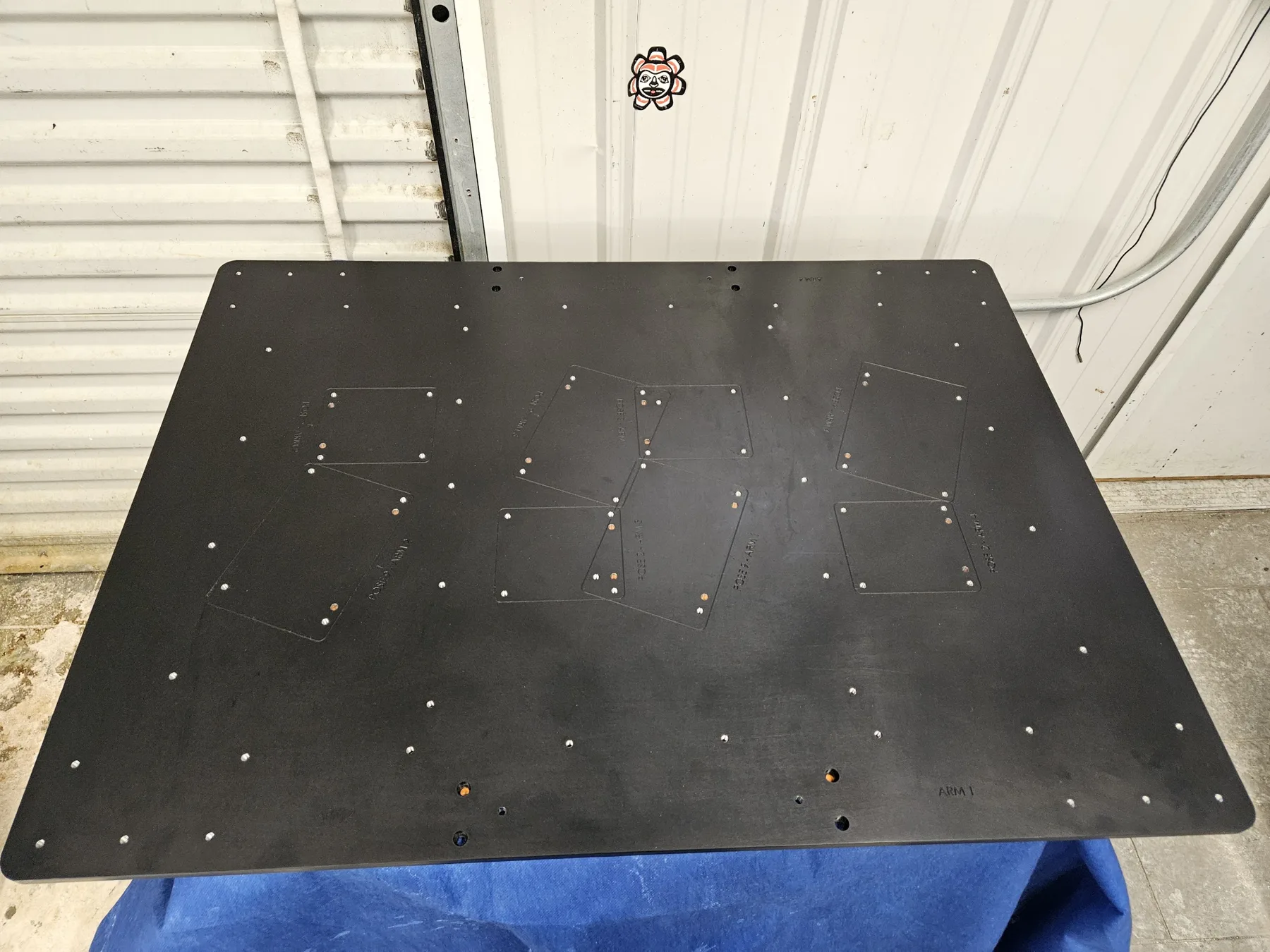 TYPE III BLACK · CUSTOMER PART
In the shop
Black Work, Both Types, Every Week
Black runs constantly here, on everything from one-off fixtures to production runs of housings and cones. It is the single most requested finish on the services list, and being the most requested is exactly why the consistency question matters on it more than on anything else.
A batch dyes together and seals together so the parts match each other, and the recipe is kept so your next order matches this one. Customers who have been burned by a vendor whose black drifted between runs tend to ask about this first, and it is a fair question to lead with.
The decision
Type II Black or Type III Black
Same color, two genuinely different coatings, and the drawing does not always make clear which one it wants. One question usually resolves it: does anything rub against this surface in service?
| WHAT DRIVES IT | TYPE II BLACK | TYPE III BLACK |
|---|---|---|
| The job | Appearance, corrosion protection | Wear resistance plus black |
| Coating build | Standard | Thicker and denser |
| Surface feel | Smooth satin black | Harder, slightly matte |
| Typical parts | Housings, panels, brackets | Slides, tooling, actuators |
Both run under MIL-A-8625 as Class 2 coatings, and our MIL-A-8625 page covers reading that callout. If the part needs a color other than black, that is the Color Anodizing page. If it needs to stay electrically conductive, black is not the answer at all and Alodine Chem Film is.
Questions
Black Anodizing Questions
Is Black Anodizing Paint?
No. The black is dye locked inside the anodic coating itself and sealed over, so there is no film to chip or peel. The surface stays as hard as the metal underneath it.
Type II Black or Type III Black, Which Do I Want?
Type II black for appearance and general corrosion protection, Type III black when the part also has to resist wear. The table above walks the decision, and if the part rubs against anything, that usually settles it.
Will Black Anodized Aluminum Fade Outdoors?
Quality black dye, properly sealed, is stable in normal service. Long-term direct sun can soften some organic dyes over years, so tell us if the part lives outside and dye selection accounts for it.
How Consistent Is Black Across a Batch?
The batch is dyed together and sealed together, so the black holds part to part. We keep the recipe from your first order, which is what makes a reorder six months later actually match.
What Is the Turnaround on Black Anodizing?
3 to 5 days standard, expedites as fast as same day, with pickup and delivery within 100 miles of Paoli.
Can Black Anodizing Be Done on Any Aluminum?
On machined aluminum, yes, though the alloy affects the tone. High-copper and high-silicon alloys tend to come out slightly different from a 6xxx series part, so if two components have to match visually, tell us the alloys and we will say what is achievable.
Where to go next
If Black Is Not Quite What the Part Needs
Black covers most of what leaves this building, but a drawing that specifies a shade, a wear requirement, or a conductive surface is asking for something adjacent. These are those pages.
Black on Your Print, Back in 3 to 5 Days.
Type II or Type III, quoted from the drawing and the count. Expedites get answered by text.