 Ano
Ano
Service
Masking, Plugging, and Assembly for Anodized Parts
Threads kept bare, bores plugged, surfaces selectively finished to your print, and parts assembled after coating so they arrive at your dock ready to use.
Start here
Why Masking Is Its Own Service Line
Because most real parts are not finished uniformly, and the exceptions are where jobs go wrong.
Threads have to stay bare so fasteners seat and torque correctly. Precision bores have to hold their size, and Anodizing grows dimension. Ground paths need conductive metal while the rest of the housing gets anodized. Sealing faces need to stay flat and true for a gasket or an O-ring to do its job.
Masking and plugging is how one part carries two conditions, and doing it well is the entire difference between a part that assembles on your bench and a part that comes back to us. It is quoted with the job because the work depends completely on which features are involved, and a part with four plugged bores is not the same job as a part with one masked face.
What we protect
The Features That Stay Bare
Mark on the drawing what has to stay uncoated and we will hold it. The four below are what we run every week, but the list is not closed. If a feature matters, call it out, and if you are not sure whether it matters, ask us before the first article, not after.
A marked-up PDF is completely sufficient. There is no form to fill in and no special notation to learn. Circle the features, note what they are, and send it with the request for quote.
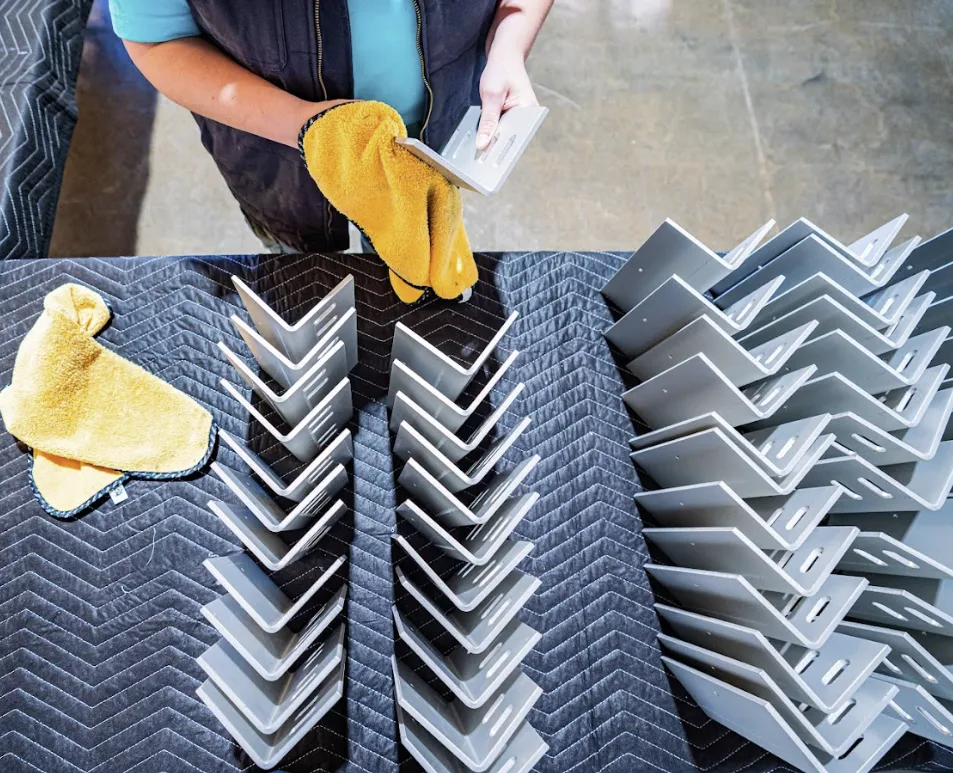 INSPECTION · EVERY BATCH
Assembly
Parts That Arrive Ready to Install
After finishing, we can assemble components so that what lands back on your dock goes straight to the next station instead of onto a build bench. For a shop running lean, that removes a whole handling step and the floor space that went with it.
Combined with pickup and delivery inside our 100 mile radius, the finishing step becomes a closed loop: your parts leave on a truck and finished assemblies come back on one. Simple mechanical assembly is routine, and anything with a controlled specification gets confirmed on the quote before we commit to it.
How it runs in Paoli
A Masked Job, Feature by Feature
Mark the Print
Circle what stays bare: threads, bores, faces, ground pads. A marked-up PDF is enough, and it is what most customers send.
Mask and Plug
Each protected feature gets the right mask for the chemistry it has to resist. Plugs, caps, dots, or custom masking, depending on the geometry.
Run the Coating
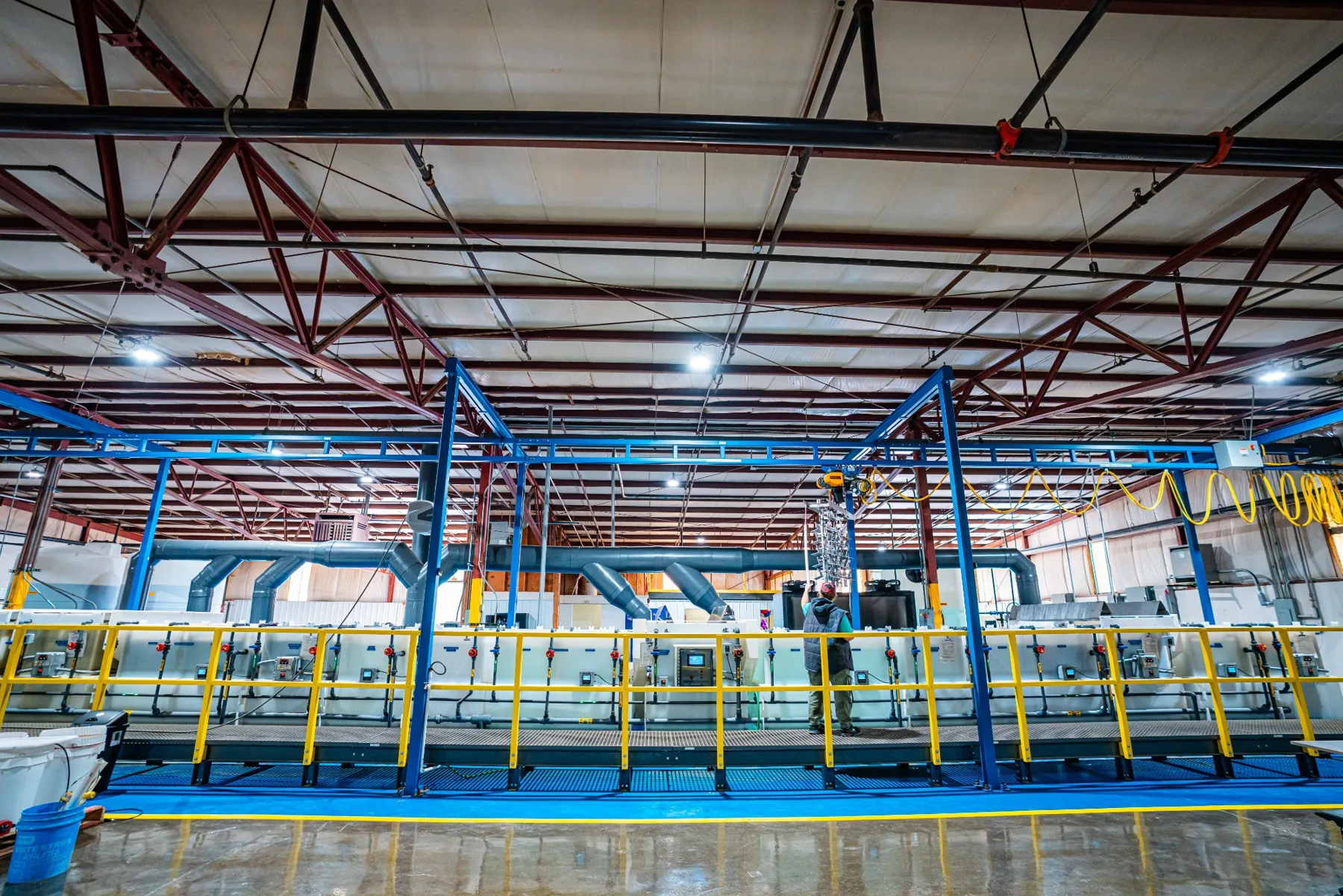
The part goes through Anodizing or Chem Film with the protected features covered, and the covering is checked before the rack goes in, not after it comes out.
Unmask, Assemble, and Return
Masks come off, any called-out assembly goes together, and finished parts head back ready to install.
Questions
Masking, Plugging, and Assembly Questions
How Do I Call Out Masking on a Drawing?
Mark the protected features on the print, or note them in the request for quote. A marked-up PDF works fine and is what most customers send. There is no special notation we need you to learn.
Is Masking Charged Separately?
Masking, plugging, and assembly are quoted with the job rather than as a flat add-on, because the work depends entirely on which features are involved and how many of them there are.
Can You Assemble Parts After Anodizing?
Yes. Tell us the assembly steps with the request and we will return finished, assembled parts. Simple mechanical assembly is routine here.
How Tight a Mask Line Can You Hold?
It depends on the feature geometry. A sharp mask line on a flat face runs considerably tighter than one on a curved surface. Send the print and we will tell you what that specific feature supports.
Do You Assemble to a Torque Specification?
Simple mechanical assembly is routine. Anything with a controlled torque specification gets confirmed on the quote, so put the requirement in the request, not in a note taped to the parts.
Can One Part Get Two Different Finishes?
Yes, and it is one of the more common reasons masking gets quoted. An anodized housing with chem filmed contact pads is a typical example. Call out both processes and the zones on the print and we will run them in the correct order.
Where to go next
The Finishes Masking Gets Quoted Alongside
Masking is never the whole job. It is quoted with whichever coating the part is getting, so the page for that process is the one that tells you what the rest of the quote covers.
Next step
Two Finishes on One Part, Zero Rework.
Masking and plugging held to your print, with assembly on request.