 Ano
Ano
Guide · Specifications
Reading a MIL-A-8625 or MIL-DTL-5541 Callout
A line like ANODIZE PER MIL-A-8625 TYPE II CLASS 2 BLACK is a complete instruction once you know what each element means. Here is every type and class combination on both specifications, translated into what a shop will actually run.
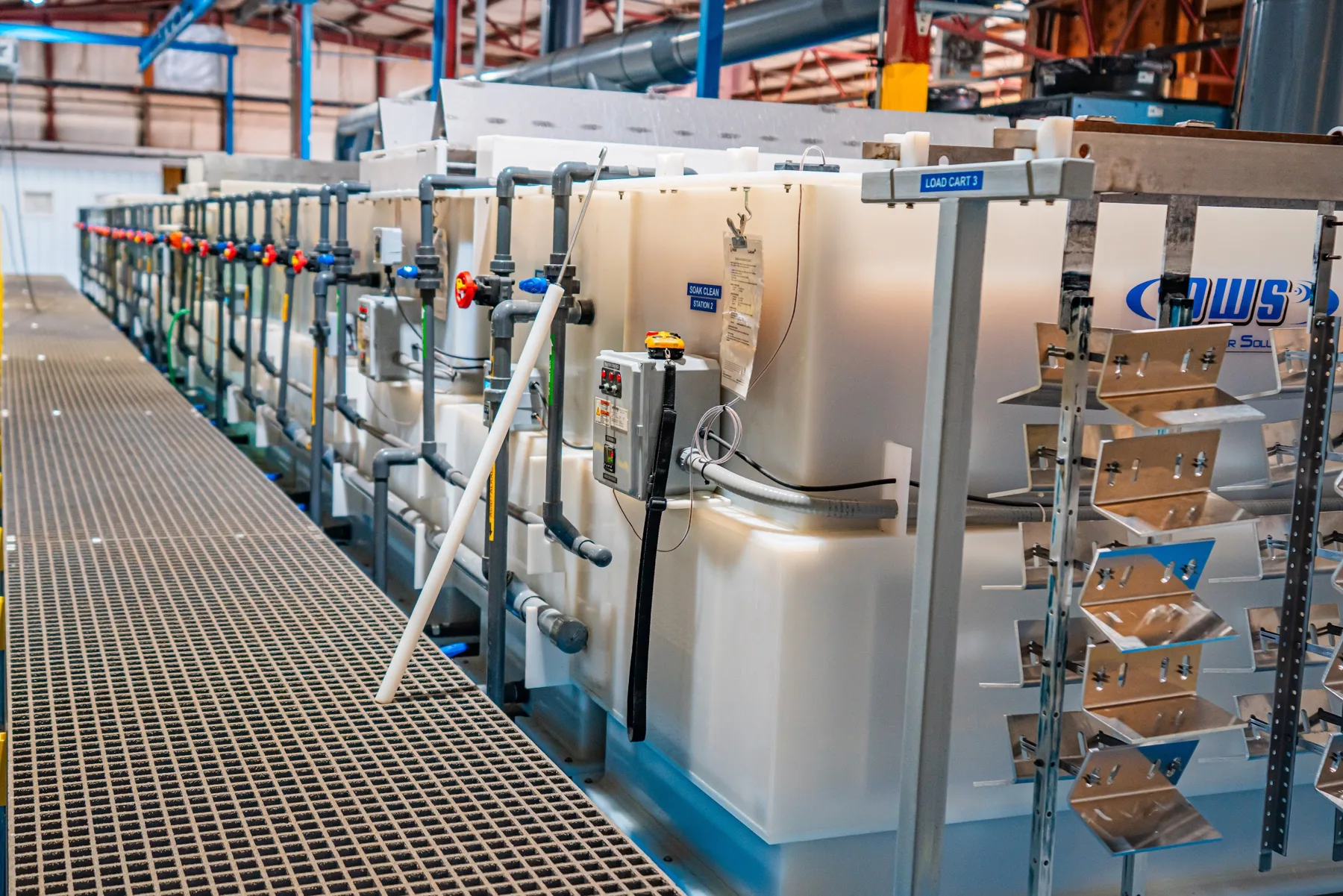 THE LINE · PAOLI, INDIANA
The Two Specifications You Will Meet Most
MIL-A-8625 governs anodic coatings on aluminum. It is the document behind almost every Anodizing callout on a defense or aerospace drawing, and it is where the words Type and Class come from. You may also see it written MIL-PRF-8625, which is the same specification after a change in document category, and MIL-A-8625F, which names the revision.
MIL-DTL-5541 governs chemical conversion coatings, the thin films known in the shop as Chem Film, by the trade name Alodine, or by the chemistry as chromate. You may see the older designation MIL-C-5541 on drawings that have not been updated. The two documents are complementary rather than competing: one insulates, one conducts, and plenty of assemblies carry both on different surfaces.
Both are published free on the government's ASSIST library at quicksearch.dla.mil. If you are specifying against either one, read the document rather than a summary, including this one.
| TYPE | PROCESS | TYPICAL USE | DO WE RUN IT |
|---|---|---|---|
| Type I / IB / IC | Chromic acid anodize | Thin coating, legacy aerospace | No, and we say so before quoting |
| Type II | Sulfuric acid anodize | The general purpose workhorse | Yes, daily |
| Type IIB | Thin sulfuric, chromic alternative | Where chromates are restricted | Discuss with us first |
| Type III | Hard anodic coating, Hard Coat | Wear surfaces, tooling, actuators | Yes, daily |
| CLASS | MEANS | LOOKS LIKE | NOTES |
|---|---|---|---|
| Class 1 | Non-dyed | Clear to light matte gray | The natural coating color |
| Class 2 | Dyed | Black, or any color we run | Color lives inside the coating |
Putting the Two Together
Type and class combine freely, which is why a callout names both. Type II Class 1 is a clear anodize. Type II Class 2 is a dyed one, usually black. Type III Class 1 is a natural Hard Coat, which still comes out dark gray because dense coatings are dark by nature. Type III Class 2 is a dyed Hard Coat, in practice almost always black, but other colors are achievable. All four of those run here.
The Rest of the Callout
After type and class, a well written callout usually specifies three more things. Seal state matters most on Hard Coat: a non-sealed coating gives the best wear resistance, and sealing trades a little of that for markedly better corrosion protection. If your drawing is silent on this, we ask rather than choosing for you.
Thickness may be called out directly, and should be on anything with a fit. Color should be named explicitly on any Class 2 part, because "dyed" alone does not tell a shop whether you want black or gold. And on parts where some features must stay bare, the drawing should mark them; threads, bores, sealing faces and ground paths are the usual suspects.
| ELEMENT | OPTION | MEANS | SPECIFY IT WHEN |
|---|---|---|---|
| Type | Type I | Traditional hexavalent chromate | The print calls for it |
| Type | Type II | Trivalent chromium alternative | Policy or the print restricts hexavalent |
| Class | Class 1A | Maximum corrosion protection | The part faces weather or salt |
| Class | Class 3 | Low contact resistance | Grounding, bonding or EMI shielding leads |
| Finish | Clear or gold | Appearance, and inspectability | Gold is visible, so inspectors can confirm coverage |
Callouts That Cause Problems, and What to Do About Them
Three patterns account for most of the questions we raise before running a job. The first is a Type I callout on a drawing whose designer wanted general corrosion protection. Chromic Acid Anodizing is a process we do not run, and substituting Type II without telling anybody is exactly the kind of quiet decision that fails somebody else's inspection. We flag it and let you decide.
The second is a Class 3 Chem Film part run as Class 1A, or the reverse. Both are conversion coatings and both look broadly similar, but Class 3 exists specifically to keep contact resistance low. A grounding surface coated to Class 1A may pass a corrosion check and still fail the job it was made for.
The third is a tight tolerance with no coating allowance. That is not strictly a callout error, but it produces the same outcome. See the thickness and tolerances guide for the numbers.
Writing a Callout That Will Not Come Back With Questions
A callout that never comes back as a question answers five things without being asked. Which specification, with the revision if your customer cares about it. Type and class, both stated explicitly. Color, named, on anything dyed. Seal state, on anything hard coated. And which features stay bare, marked on the drawing rather than described in an email.
A sixth is worth adding on close-tolerance work: whether the dimensions on the drawing apply before or after finishing. A note reading "dimensions apply after anodize" removes an entire category of argument, because the machinist and the finisher are then working to the same number.
None of this is about making a drawing longer. A complete callout is usually one extra line and it is the difference between a quote coming back the same day and a quote coming back as a question.
Other Specifications You May See
AMS 2482 is the SAE aerospace specification for hard anodic coatings impregnated with PTFE, giving a wear surface that carries its own dry lubricant. We run it as PTFE Impregnated Anodizing. NASA/JSC PRC-5006 and PRC-5005 are process specifications for Anodizing and conversion coating respectively, and we support both. AMS 2470 and AMS 2471 cover chromic and Sulfuric Anodizing on the aerospace side, and where a drawing cites one we will tell you plainly whether it lands inside what we run.
Common Questions
What Does MIL-A-8625 Type II Class 2 Mean?
Sulfuric Acid Anodizing, dyed. Type II is the standard sulfuric process and Class 2 means the coating takes dye, most commonly black. The drawing should also name the color, because Class 2 on its own does not distinguish black from gold. We run this combination every day.
What Is the Difference Between MIL-A-8625 and MIL-PRF-8625?
They are the same specification. The document was recategorized from a specification to a performance specification, which changed the prefix. A drawing citing either one is asking for the same thing, and older drawings frequently still say MIL-A-8625.
What Does MIL-DTL-5541 Type II Class 3 Mean?
A trivalent chromium conversion coating specified for low contact resistance. Type II names the chemistry as the trivalent alternative to traditional hexavalent, and Class 3 means the part needs to conduct, typically because it carries a ground path, a bonding surface or EMI shielding.
Is MIL-C-5541 Still Valid?
It is the older designation for what is now MIL-DTL-5541, and drawings citing it are common. A part called out to MIL-C-5541 gets run to the current document unless your customer requires otherwise, and if that matters on your job, say so with the request for quote.
Do You Run Type I Chromic Acid Anodizing?
No. When a drawing carries a Type I callout we say so before quoting rather than substituting Type II and hoping the difference stays buried until inspection. We run Type II and Type III under MIL-A-8625, in Class 1 and Class 2.
What Happens if My Drawing Is Missing the Class or the Color?
We ask. An incomplete callout gets raised before the job runs, not after, because a clear part delivered against a drawing that meant black is scrap for its purpose even though nothing was done incorrectly.
Which Revision of the Specification Should I Cite?
Cite whichever your customer requires, and state it. Revisions do change requirements, and a drawing citing a bare specification number without a revision leaves the shop to assume the current one. Where your program is fixed to an older revision, say so with the request for quote.
What Happens if Two Callouts on the Drawing Contradict Each Other?
We stop and ask before running. A contradiction between a note, a title block and a flag note is common on drawings that have been revised several times, and guessing which one is current is exactly the decision a finisher should never make on your behalf.
Can One Part Carry Both an Anodize and a Chem Film Callout?
Yes, and it is common on housings that need corrosion protection overall and a conductive ground path in specific places. The bare and coated zones get marked on the print, we mask to it, and the two processes run in the correct order so neither undoes the other.
Keep Reading
Send the Callout Exactly as Written.
We quote from the drawing and raise anything ambiguous before the parts go in a tank, not after.